Share this Article
Chronic Obstructive Pulmonary Disease (COPD) is a long-term lung condition that makes breathing difficult. Common symptoms include persistent coughing, wheezing, chest tightness, and shortness of breath. These symptoms may gradually worsen and can interfere with everyday activities such as walking, climbing stairs, or exercising.
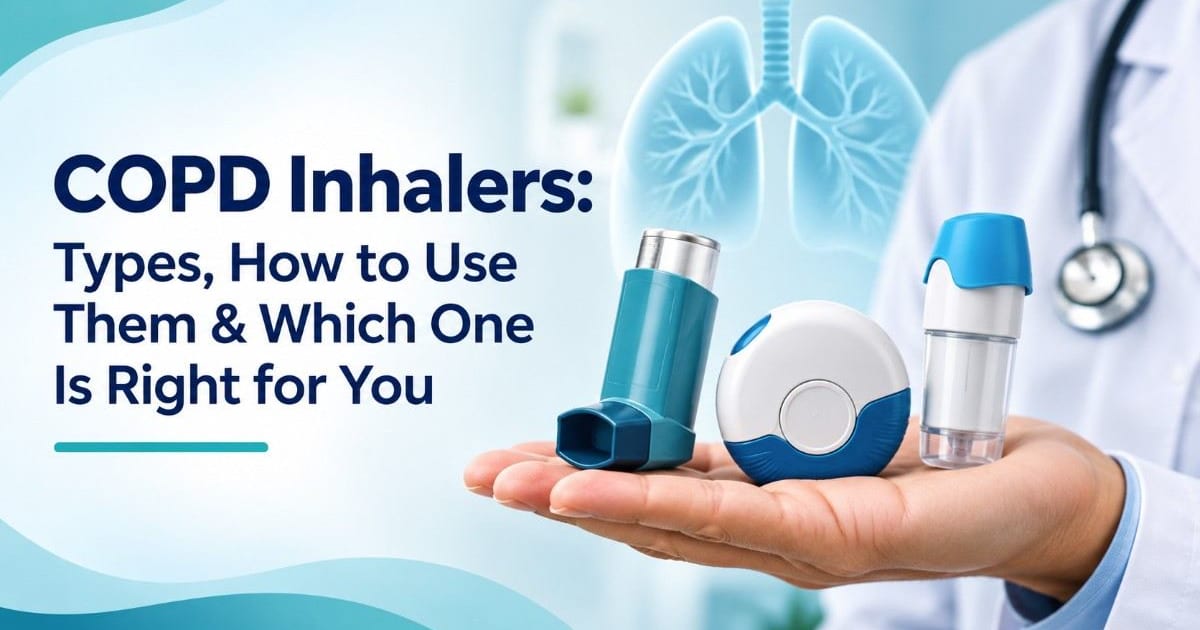
Inhalers for COPD play an important role in managing these symptoms. They deliver medication directly into the lungs to help open the airways, improve breathing, and, in selected patients, reduce inflammation. However, different inhalers work in different ways, and choosing the right one depends on the patient's symptoms, medical history, and treatment needs.
This guide explains the types of COPD inhalers, how to use them correctly, the difference between an inhaler and a nebulizer, and when a specialist's advice may be needed.
What are COPD inhalers, and how do they work?
COPD inhalers are devices that deliver medication into the airways. Depending on the medicine, they may relax the muscles surrounding the airways, reduce inflammation, or provide a combination of these effects.
Inhaled medicines can help patients breathe more comfortably and manage symptoms. Some are used for quick relief when breathing becomes difficult, while others are taken regularly to maintain symptom control and reduce flare-ups.
The choice of inhaler depends on several factors, including symptom severity, history of exacerbations, other medical conditions, and the patient's ability to use the device correctly.
Types of COPD inhalers
Understanding the different types of COPD inhalers can help patients follow their treatment plans more confidently.
1. Short-acting bronchodilator inhalers
Short-acting bronchodilators relax the muscles around the airways, helping them open up and making breathing easier. They may be prescribed for quick relief when symptoms increase.
Common examples include:
Salbutamol inhaler: Helps relax airway muscles and relieve breathing symptoms.
Ipratropium inhaler: Helps open the airways through a different mechanism.
These medicines can provide short-term relief, but frequent or increasing use may indicate that COPD is not adequately controlled. Patients should follow their prescribed instructions and seek medical advice if symptoms become more frequent.
2. Long-acting bronchodilator inhalers
Long-acting bronchodilators help keep the airways open for an extended period. They are commonly used as maintenance treatment for COPD.
They include two main groups:
Long-acting beta-2 agonists (LABAs): Examples include salmeterol and formoterol.
Long-acting muscarinic antagonists (LAMAs): An example is tiotropium.
A tiotropium inhaler may be prescribed to help manage persistent COPD symptoms. Some patients benefit from using a LABA and a LAMA together when one medicine does not provide sufficient control.
These inhalers are generally taken regularly as prescribed rather than used only when symptoms occur.
3. Steroid inhalers
Inhaled corticosteroids help reduce inflammation in the airways. They may be recommended for selected COPD patients, particularly those with certain patterns of exacerbations or features suggesting they may benefit from this treatment.
However, steroid inhalers are not necessary for everyone with COPD. Their benefits must be weighed against possible risks, including oral thrush, hoarseness, and an increased risk of pneumonia in some patients.
Patients using an inhaled corticosteroid should generally rinse their mouth with water and spit it out after each dose.
4. Combination inhalers
Combination inhalers contain two or more medicines in a single device. They may combine two long-acting bronchodilators or a bronchodilator with an inhaled corticosteroid.
For example, certain formulations containing salmeterol and fluticasone combine a long-acting bronchodilator with a corticosteroid. Seroflo is a brand associated with this combination, but its suitability depends on the specific product and the patient's medical needs.
Combination inhalers can simplify treatment for some patients. However, not every combination is appropriate for every person with COPD. A doctor should determine which medicine and device best suit the patient's condition.
MDI vs. DPI inhaler: what is the difference?
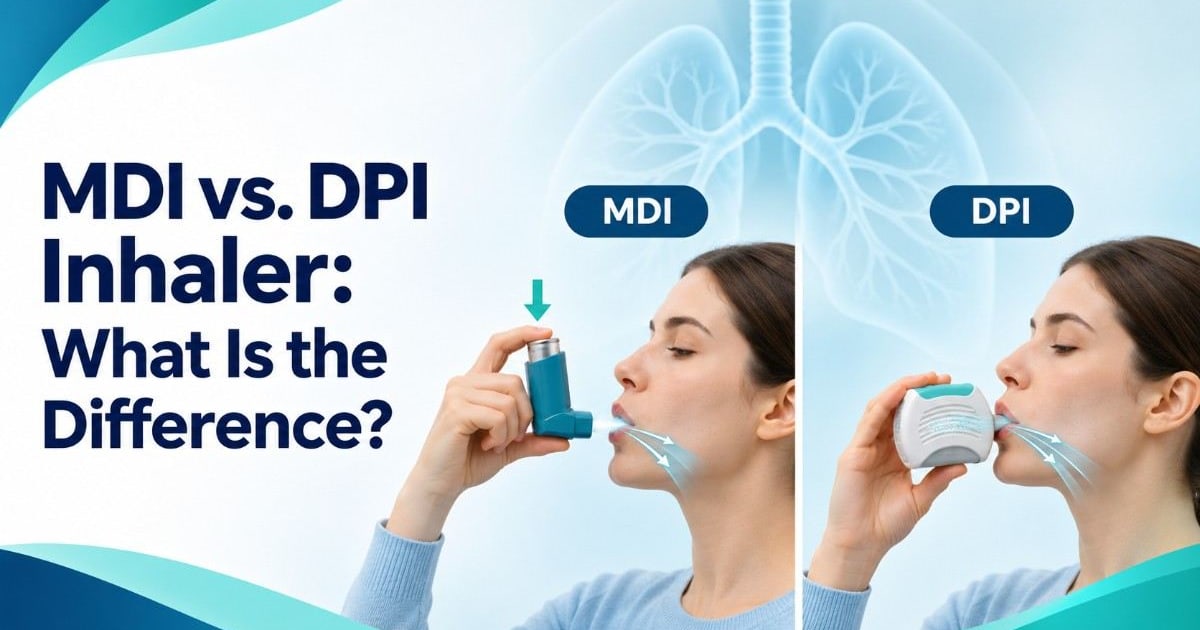
The type of device matters because the medicine must reach the lungs effectively.
A metered-dose inhaler (MDI) releases a measured amount of medication as a spray. It usually requires a slow, deep inhalation coordinated with pressing the inhaler. A compatible spacer may help patients who struggle with this coordination.
A dry-powder inhaler (DPI) delivers medication in powder form. It generally requires a quick, deep breath to draw the medicine into the lungs.
Feature | MDI | DPI |
Medication form | Aerosol spray | Dry powder |
Breathing technique | Usually slow and deep | Usually quick and deep |
Coordination | May require coordination by pressing the device | Usually breath-activated |
Spacer device | May be compatible | Generally not used |
Neither device is universally better. The appropriate option depends on the prescribed medicine, inhalation ability, and ease of use. A healthcare professional can demonstrate the correct technique for the specific device.
How to use an inhaler for COPD correctly
Incorrect inhaler technique can reduce the amount of medicine reaching the lungs. The exact steps vary by device, so patients should follow the manufacturer's instructions and ask a healthcare professional to demonstrate the process. For a typical pressurized metered-dose inhaler:
Prepare the inhaler: Check whether it needs shaking or priming, according to its instructions.
Breathe out gently: Exhale away from the mouthpiece.
Position the device: Place the mouthpiece between your lips and create a good seal.
Inhale slowly: Begin a slow, deep breath while pressing the inhaler as directed.
Hold your breath: If comfortable, hold it for around 5 to 10 seconds before breathing out slowly.
Follow the prescribed dose: Wait between doses if instructed and use a spacer if recommended and compatible.
Clean the device: Follow the product's cleaning instructions.
Dry-powder inhalers require a different technique, generally involving a quick, deep inhalation. Patients should not apply the same instructions to every device.
If you are unsure whether you are using your inhaler correctly, ask your doctor, nurse, or pharmacist to check your technique.
Inhaler vs. nebulizer for COPD
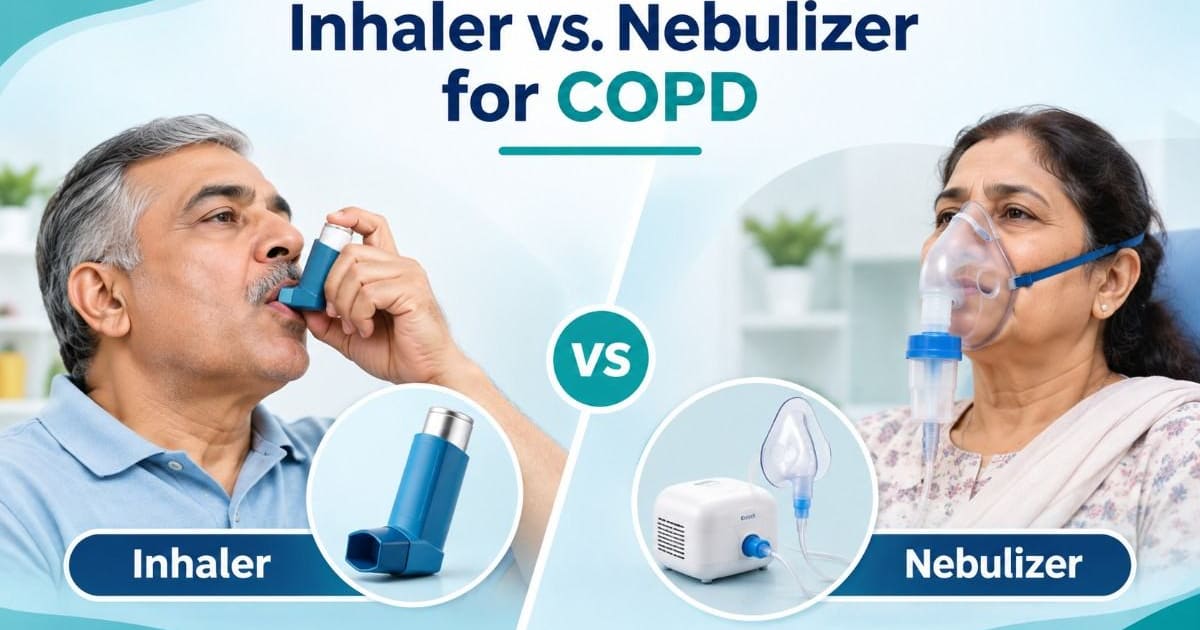
A nebulizer converts liquid medication into a mist that can be inhaled through a mouthpiece or mask. It may be useful for patients who struggle to use certain inhalers or who need nebulized medication as part of their treatment.
However, a nebulizer is not automatically more effective than an inhaler. Inhalers can deliver COPD medication effectively when the correct device and technique are used. They are also generally more portable and convenient.
The choice depends on the medication prescribed, the patient's ability to use the device, and the clinical situation. Patients should not switch devices without consulting their healthcare professional.
Read More: Surgery for Stage 1 & 2 Lung Cancer: Types & Recovery | GetBeds
COPD inhaler side effects
The possible side effects depend on the medicine used.
Bronchodilators: May cause tremors, palpitations, a faster heartbeat, or dry mouth.
Inhaled corticosteroids: May cause hoarseness or oral thrush and can increase pneumonia risk in some patients.
Combination inhalers: May cause side effects associated with their individual ingredients.
Not everyone experiences these effects. Patients should report persistent or concerning symptoms to their healthcare professional rather than stopping treatment independently.
Severe breathlessness, bluish lips, confusion, or rapidly worsening breathing difficulties require urgent medical attention.
Which COPD inhaler is right for you?
There is no single best inhaler for COPD in India or anywhere else that suits every patient. The right choice depends on symptom severity, flare-up history, previous treatment response, other health conditions, and the patient's ability to use the device.
A doctor may recommend a short-acting bronchodilator for quick relief, a long-acting inhaler for ongoing symptom management, or a combination treatment when appropriate. Inhaled corticosteroids may be considered for selected patients after evaluating potential benefits and risks.
Regular reviews can help determine whether treatment is working and whether inhaler technique needs improvement. Patients should not start, stop, or change medication based solely on online information.
Finding the right specialist for COPD

Persistent coughing, breathlessness, wheezing, or repeated respiratory flare-ups should be evaluated by a healthcare professional. A pulmonologist specialises in lung and respiratory conditions and can assess symptoms, recommend appropriate investigations, and guide treatment.
GetBeds helps patients explore hospital information and find doctors and specialists for their healthcare needs. Patients can use the platform to discover hospitals and connect with relevant specialists when seeking evaluation and ongoing management for COPD.
Conclusion
COPD inhalers are an important part of managing breathing difficulties and reducing symptoms. From short-acting bronchodilators to long-acting medicines and combination inhalers, each type has a specific role in treatment.
Choosing the right device, using it correctly, and following a personalised treatment plan can make a meaningful difference. Patients should work with their healthcare team to review their symptoms, understand possible side effects, and seek timely care when breathing difficulties worsen.
Frequently Asked Questions
There is no single best inhaler for everyone with COPD. The choice depends on symptoms, exacerbation history, other health conditions, and inhalation ability. A healthcare professional can recommend a suitable treatment plan.
The correct technique depends on the device. A metered-dose inhaler usually requires a slow, deep breath coordinated with releasing the medicine, while a dry-powder inhaler generally requires a quick, deep inhalation. Follow the instructions for your specific device.
An MDI delivers medication as an aerosol spray, while a DPI delivers it as dry powder. They require different inhalation techniques, and the appropriate choice depends on the patient's needs and ability to use the device.
Both devices can deliver COPD medication. Inhalers are often convenient and effective when used correctly, while nebulizers may be suitable in certain situations. A healthcare professional can recommend the appropriate device.
Possible side effects include tremors, palpitations, dry mouth, hoarseness, and oral thrush, depending on the medicine. Some inhaled corticosteroids may increase pneumonia risk in people with COPD. Discuss persistent side effects with your healthcare professional.
Disclaimer:
This blog is for informational purposes only and does not constitute scientific recommendations. Always consult a certified healthcare expert for analysis and remedies.